
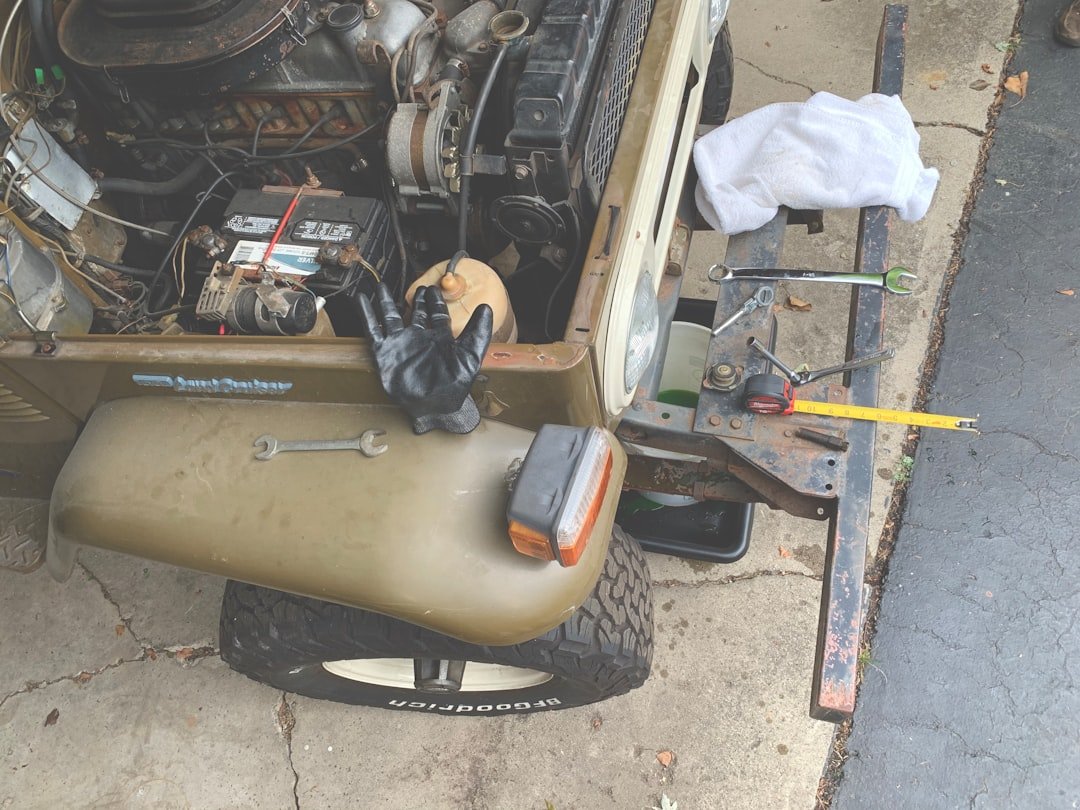
Routine maintenance is the cornerstone of vehicle longevity and performance. To effectively carry out these tasks, a set of basic tools is essential. A comprehensive toolkit typically includes a socket set, wrenches, screwdrivers, pliers, and a torque wrench.
A socket set, which often comes in both metric and standard sizes, allows for the easy removal and installation of various fasteners found throughout the vehicle. The versatility of a socket set makes it indispensable for tasks ranging from oil changes to battery replacements. Wrenches are another fundamental component of any mechanic’s toolkit.
They come in various types, including open-end, box-end, and adjustable wrenches, each serving a specific purpose. Open-end wrenches are ideal for loosening or tightening nuts and bolts in tight spaces, while box-end wrenches provide a more secure grip on fasteners. Additionally, a torque wrench is crucial for ensuring that bolts are tightened to the manufacturer’s specifications, preventing damage to components due to over-tightening or under-tightening.
Screwdrivers, both flathead and Phillips, are necessary for accessing various panels and components, making them vital for routine checks and repairs.
Specialized Tools for Engine Repairs
When it comes to engine repairs, specialized tools become necessary to address the complexities of modern engines. One such tool is the engine hoist, which is essential for lifting heavy engines out of the vehicle for extensive repairs or replacements. Engine hoists come in various configurations, including foldable models that save space in a garage.
They typically feature adjustable arms and a hydraulic lift mechanism that allows for precise control when maneuvering the engine. Another critical tool for engine work is the timing light. This device is used to check the ignition timing of an engine, ensuring that the spark plugs fire at the correct moment in relation to the position of the pistons.
Proper ignition timing is vital for optimal engine performance and fuel efficiency. Additionally, an engine compression tester is invaluable for diagnosing issues related to engine health. By measuring the pressure in each cylinder, mechanics can identify problems such as worn piston rings or leaking valves, allowing for targeted repairs.
Essential Tools for Brake and Suspension Work
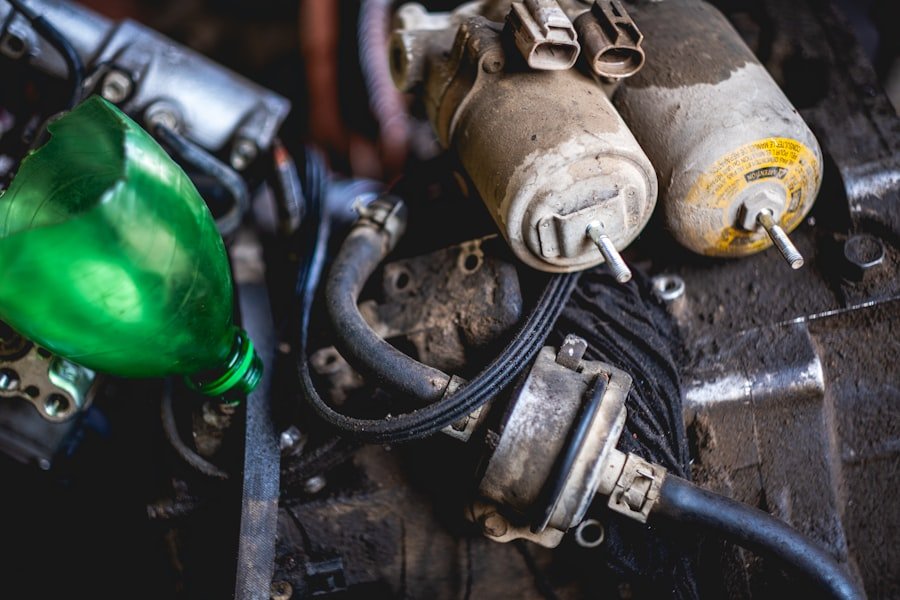
Brake and suspension systems are crucial for vehicle safety and handling, making specialized tools necessary for their maintenance and repair. A brake bleeder kit is essential for ensuring that brake fluid is free of air bubbles, which can compromise braking performance. These kits often include a vacuum pump or a one-way valve system that allows for easy bleeding of brake lines without introducing air back into the system.
For suspension work, a spring compressor is an indispensable tool. This device allows mechanics to safely compress coil springs when replacing struts or shocks. Without a spring compressor, attempting to remove or install suspension components can be dangerous due to the high tension stored in the springs.
Additionally, a ball joint separator is useful for disconnecting ball joints from control arms or steering knuckles without damaging surrounding components. These tools not only enhance safety but also streamline the repair process.
Tools for Electrical System Diagnosis and Repair
| Tool | Function | Usage |
|---|---|---|
| Multimeter | Measures voltage, current, and resistance | Used to troubleshoot electrical circuits and components |
| Circuit Tester | Checks for the presence of electrical current | Identifies open circuits, short circuits, and faulty connections |
| Wire Strippers | Removes insulation from electrical wires | Prepares wires for splicing, connecting, or terminating |
| Insulation Resistance Tester | Measures the resistance of insulation materials | Detects insulation breakdown and potential electrical hazards |
The electrical system of a vehicle is increasingly complex, necessitating specialized tools for effective diagnosis and repair. A multimeter is one of the most important tools in this category, allowing mechanics to measure voltage, current, and resistance in various electrical circuits. This capability is essential for troubleshooting issues such as faulty wiring or malfunctioning sensors.
In addition to a multimeter, an automotive scan tool or code reader is invaluable for diagnosing problems related to the vehicle’s onboard computer systems. These devices can read diagnostic trouble codes (DTCs) generated by the vehicle’s computer when it detects an issue. By interpreting these codes, mechanics can pinpoint specific problems within the electrical system, such as sensor failures or communication errors between modules.
Advanced scan tools also offer live data monitoring capabilities, enabling technicians to observe real-time performance metrics while driving.
Equipment for Tire Maintenance and Replacement
Tire maintenance is critical for vehicle safety and performance, making specific equipment necessary for effective care. A tire pressure gauge is one of the simplest yet most important tools in this category. Maintaining proper tire pressure not only enhances fuel efficiency but also extends tire life and improves handling.
Digital tire pressure gauges provide quick and accurate readings, making it easier to monitor tire health regularly. For tire replacement, a tire changer is an essential piece of equipment in any serious mechanic’s workshop. Tire changers automate the process of removing old tires and installing new ones, significantly reducing the time and effort required compared to manual methods.
Many modern tire changers come equipped with features such as automatic bead breakers and adjustable arms to accommodate various tire sizes. Additionally, a wheel balancer is crucial for ensuring that tires are evenly balanced after installation, preventing vibrations that can lead to uneven wear and compromised handling.
Tools for Fluid Changes and Maintenance

Fluid changes are a vital aspect of vehicle maintenance that ensures optimal performance and longevity. A fluid extractor is an essential tool for efficiently removing old fluids from systems such as the engine oil pan or transmission. These devices use suction to draw out fluids without requiring extensive disassembly, making them particularly useful for vehicles with tight spaces.
In addition to fluid extractors, funnel sets are indispensable when adding new fluids to various systems. Funnels designed specifically for automotive use often feature long necks and wide openings to prevent spills during fluid transfers. Furthermore, oil filter wrenches are crucial for removing old oil filters during oil changes; they come in various designs to accommodate different filter sizes and shapes.
Using the right tools not only simplifies fluid changes but also minimizes the risk of contamination or spills.
Safety Equipment for Car Maintenance and Repairs
Safety should always be a top priority when performing car maintenance and repairs. Personal protective equipment (PPE) such as gloves, safety glasses, and steel-toed boots are essential for protecting against injuries from sharp objects or heavy components. Mechanic gloves made from durable materials provide grip while safeguarding hands from cuts and abrasions during repairs.
In addition to personal protective gear, having proper ventilation in the workspace is crucial when working with chemicals or exhaust fumes. Fume extractors or fans can help maintain air quality by removing harmful vapors from the environment. Fire extinguishers should also be readily available in any garage or workshop where flammable materials are present.
By prioritizing safety equipment and practices, mechanics can create a safer working environment that minimizes risks associated with car maintenance.
Additional Tools for Advanced DIY Mechanics
For those who take their automotive skills to the next level, additional tools can enhance capabilities significantly. A diagnostic oscilloscope is one such advanced tool that allows mechanics to visualize electrical signals in real-time. This capability is particularly useful for diagnosing complex issues within electronic control units (ECUs) or sensor outputs that standard multimeters cannot adequately assess.
Another valuable tool for advanced DIY mechanics is a portable jump starter with built-in air compressors and USB charging ports. These multifunctional devices not only provide a quick jump start but also allow users to inflate tires or charge electronic devices on-the-go. Furthermore, an automotive stethoscope can help diagnose mechanical noises by amplifying sounds from various engine components, aiding in pinpointing issues like bearing wear or valve noise.
Investing in these advanced tools not only expands a mechanic’s skill set but also enhances their ability to tackle more complex repairs with confidence and precision. As automotive technology continues to evolve, staying equipped with the right tools becomes increasingly important for both professional mechanics and dedicated DIY enthusiasts alike.
FAQs
What are the most essential tools for car maintenance and repairs?
Some of the most essential tools for car maintenance and repairs include a socket set, wrench set, screwdriver set, pliers, jack and jack stands, torque wrench, oil filter wrench, and a multimeter.
Why is a socket set important for car maintenance and repairs?
A socket set is important for car maintenance and repairs because it allows for easy removal and installation of nuts and bolts in various sizes.
What is the significance of a torque wrench in car maintenance and repairs?
A torque wrench is significant in car maintenance and repairs as it ensures that bolts and nuts are tightened to the correct specifications, preventing over-tightening or under-tightening.
Why is a jack and jack stands necessary for car maintenance and repairs?
A jack and jack stands are necessary for car maintenance and repairs as they provide a safe and stable way to lift the car off the ground, allowing for access to the undercarriage for repairs and maintenance.
What role does an oil filter wrench play in car maintenance and repairs?
An oil filter wrench is essential for car maintenance and repairs as it allows for easy removal and installation of the oil filter during oil changes.
Why is a multimeter important for car maintenance and repairs?
A multimeter is important for car maintenance and repairs as it allows for testing of electrical systems, including checking for voltage, continuity, and resistance in various components of the car.