
Rome, often referred to as the Eternal City, is a treasure trove of ancient history that has captivated historians, archaeologists, and travelers alike for centuries. The city’s origins can be traced back to 753 BC, steeped in myth and legend, with the tale of Romulus and Remus, twin brothers raised by a she-wolf. This foundational myth not only symbolizes the birth of Rome but also reflects the city’s enduring spirit and resilience.
As one wanders through the cobbled streets of Rome, the remnants of its glorious past are omnipresent, from the majestic ruins of temples to the remnants of aqueducts that once supplied water to its citizens. The Roman Empire, at its zenith, was a sprawling entity that encompassed vast territories across Europe, North Africa, and parts of Asia. The influence of Roman law, governance, and culture is still felt today.
The Forum Romanum, once the heart of political life in ancient Rome, served as a marketplace and a venue for public speeches, criminal trials, and gladiatorial matches. The architecture of ancient Rome is a testament to its engineering prowess; structures like the Pantheon with its grand dome and the intricate system of roads that connected the empire are marvels that continue to inspire modern engineering. Each stone in Rome tells a story, echoing the voices of emperors, senators, and common citizens who shaped the course of history.
Navigating the Intriguing Canals of Venice
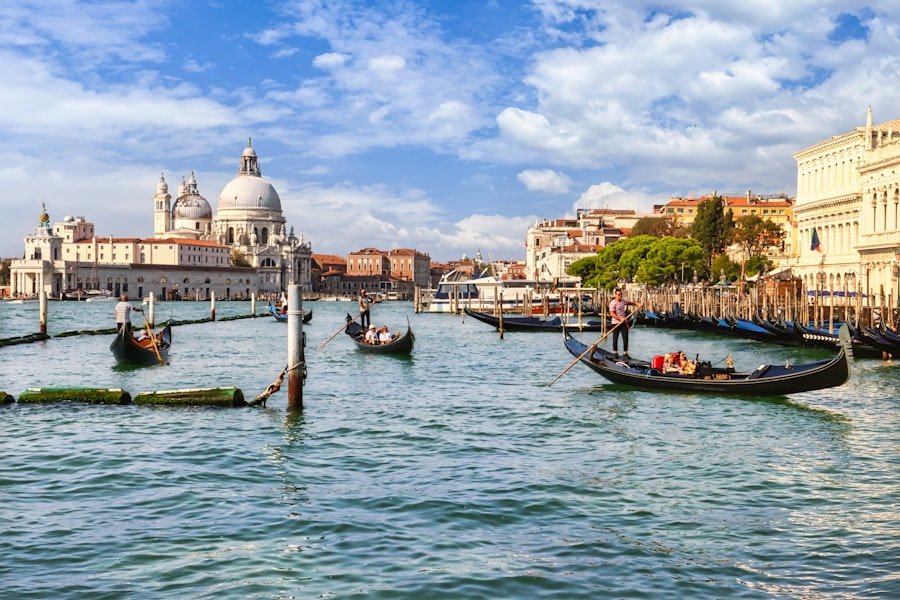
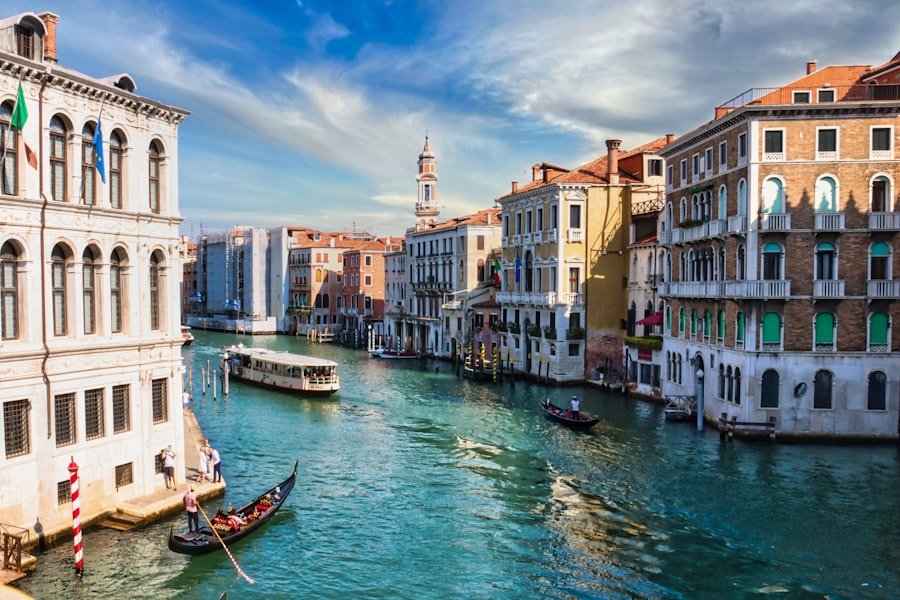
Venice, often described as a floating city, is a unique marvel characterized by its intricate network of canals that serve as both thoroughfares and picturesque backdrops. The Grand Canal, the main artery of Venice, winds through the city like a shimmering ribbon, lined with stunning palaces that showcase the wealth and artistry of the Venetian Republic during its golden age. As one glides along the canal in a traditional gondola or a vaporetto (water bus), the experience is akin to stepping back in time.
The reflections of historic buildings on the water’s surface create an enchanting atmosphere that is both serene and vibrant. The canals are not merely functional; they are integral to Venice’s identity. Each bridge crossing offers a new perspective on the city’s architectural splendor.
The Rialto Bridge, one of the most famous landmarks, has stood since the late 16th century and serves as a bustling marketplace where locals and tourists alike gather to shop for fresh produce and artisanal goods. The interplay between water and architecture in Venice creates a unique aesthetic that has inspired countless artists and writers throughout history. The city’s labyrinthine layout invites exploration, with hidden squares and charming alleyways waiting to be discovered around every corner.
Exploring the Iconic Colosseum in Rome
The Colosseum stands as an enduring symbol of Rome’s imperial might and architectural ingenuity. Constructed between AD 70 and 80 under Emperor Vespasian, this colossal amphitheater could hold up to 80,000 spectators who gathered to witness gladiatorial contests, animal hunts, and other public spectacles. Its elliptical shape and tiered seating reflect advanced engineering techniques that were revolutionary for their time.
The use of concrete and the innovative design allowed for rapid construction while ensuring durability, enabling this iconic structure to withstand the test of time. Walking through the Colosseum today evokes a sense of awe as one imagines the roar of the crowd and the clash of swords that once filled its arena. The intricate system of underground passages known as the hypogeum housed animals and gladiators before they ascended into the spotlight.
This subterranean world adds another layer to the Colosseum’s history, revealing the complexities behind its grand performances. Restoration efforts have been ongoing to preserve this ancient wonder, ensuring that future generations can appreciate its historical significance. The Colosseum is not just an architectural feat; it is a monument to human ambition and creativity.
St. Mark’s Basilica is a breathtaking example of Byzantine architecture that dominates the Piazza San Marco in Venice. Its opulent façade adorned with intricate mosaics tells stories from Christian scripture and Venetian history, shimmering in gold leaf under the sun.
The basilica was originally built in the 9th century to house the relics of St. Mark, which were said to have been stolen from Alexandria. This act not only solidified Venice’s status as a significant religious center but also showcased its maritime prowess.
Inside St. Mark’s Basilica, visitors are greeted by an overwhelming sense of grandeur. The interior is a kaleidoscope of colors and patterns created by thousands of mosaics that cover walls and ceilings.
The use of light filtering through stained glass windows enhances this ethereal atmosphere, making it feel almost otherworldly. The Pala d’Oro, an exquisite altarpiece encrusted with gems and gold, serves as a focal point within the basilica, drawing admiration from all who enter. Each visit to St.
Mark’s Basilica is an invitation to reflect on centuries of faith, artistry, and cultural exchange that have shaped Venice into the enchanting city it is today.
Discovering the Ruins of the Roman Forum
| Metrics | Data |
|---|---|
| Visitors per year | Over 4 million |
| Area | 44,000 square meters |
| Number of ruins | Over 30 |
| Historical significance | Center of Roman public life |
The Roman Forum is an archaeological wonder that offers a glimpse into the daily life and political machinations of ancient Rome. Once bustling with activity, this rectangular plaza was surrounded by important government buildings, temples, and marketplaces where citizens gathered to discuss matters of state or engage in commerce. Walking through the ruins today allows one to visualize the vibrant life that once thrived here; remnants of temples dedicated to gods like Jupiter and Saturn stand as testaments to Rome’s religious fervor.
Among the ruins lies the Curia Julia, where the Senate convened to debate laws and policies that would shape the empire’s future. Nearby stands the Rostra, a platform from which orators would address crowds—an echo of democracy in action during a time when power was concentrated in the hands of a few. The Forum also served as a site for triumphal processions celebrating military victories, further solidifying its role as a center of Roman identity.
As one explores these ancient stones, it becomes clear that the Forum was not just a physical space but a symbol of Roman civilization’s complexity and ambition.
Immersing in the Art and Architecture of Venice’s Grand Canal
The Grand Canal is often referred to as Venice’s main street; however, it is unlike any street found elsewhere in the world. This winding waterway is flanked by an array of architectural styles that reflect Venice’s rich history as a crossroads of trade and culture. From Gothic palaces adorned with intricate carvings to Renaissance buildings showcasing symmetry and proportion, each structure tells a story about its era and purpose.
Notable landmarks such as Ca’ d’Oro and Palazzo Venier dei Leoni exemplify this architectural diversity. Art enthusiasts will find themselves captivated by the numerous galleries lining the Grand Canal, showcasing works from both classical masters and contemporary artists. The Peggy Guggenheim Collection is particularly noteworthy; housed in an 18th-century palace, it features an impressive array of modern art from artists like Picasso and Pollock.
The juxtaposition of historic architecture with modern artistic expression creates a dynamic cultural landscape that invites exploration and appreciation. As one navigates this vibrant thoroughfare by boat or on foot, it becomes evident that Venice’s Grand Canal is not merely a means of transportation but a living canvas reflecting centuries of artistic endeavor.
Walking Through the Historic Streets of Rome
Strolling through Rome’s historic streets is akin to walking through an open-air museum where every corner reveals layers of history waiting to be uncovered. The narrow alleys are lined with charming trattorias, artisan shops, and gelaterias that invite visitors to pause and savor local flavors while soaking in their surroundings. Each neighborhood has its own character; Trastevere boasts cobblestone streets adorned with ivy-covered buildings, while Monti offers a bohemian vibe with vintage boutiques nestled among ancient ruins.
As one wanders through these streets, iconic landmarks emerge unexpectedly—such as the Trevi Fountain with its baroque splendor or Piazza Navona with its lively atmosphere filled with street performers and artists capturing moments on canvas. The vibrant energy of Rome is palpable; locals engage in animated conversations while children play nearby, creating a tapestry of life that reflects both tradition and modernity. This blend makes every walk through Rome an immersive experience where history comes alive through architecture, art, and everyday life.
Savoring the Culinary Delights of Italy from Rome to Venice
Italy’s culinary landscape is as diverse as its regions, with each city offering unique flavors that reflect local traditions and ingredients. In Rome, one can indulge in classic dishes such as carbonara—a creamy pasta dish made with eggs, cheese, pancetta, and pepper—or cacio e pepe, which highlights simplicity through just cheese and pepper tossed with pasta. Street food also plays an essential role in Roman cuisine; supplì—fried rice balls filled with mozzarella—are a must-try for those seeking authentic flavors on-the-go.
Traveling north to Venice introduces another culinary adventure characterized by fresh seafood and risottos infused with local herbs. Cicchetti—small plates served in bars—allow diners to sample various Venetian specialties while enjoying a glass of local wine or spritz. Dishes like sarde in saor (sweet-and-sour sardines) showcase Venice’s maritime heritage while highlighting its historical trade connections with spices from far-off lands.
From bustling markets filled with fresh produce to elegant dining establishments overlooking canals, Italy’s culinary delights offer an unforgettable journey through taste that complements its rich cultural heritage beautifully.
FAQs
What are the top attractions in Italy?
Some of the top attractions in Italy include the Colosseum and Roman Forum in Rome, the canals of Venice, the Leaning Tower of Pisa, the art and architecture of Florence, and the ancient city of Pompeii.
What are some popular activities to do in Italy?
Popular activities in Italy include exploring historical sites, enjoying Italian cuisine, wine tasting in Tuscany, taking gondola rides in Venice, and shopping for high-end fashion in Milan.
What are the best cities to visit in Italy?
Some of the best cities to visit in Italy include Rome, Florence, Venice, Milan, Naples, and Verona.
What are some must-see landmarks in Italy?
Must-see landmarks in Italy include the Colosseum, the Pantheon, the Vatican City, the Duomo in Florence, the Grand Canal in Venice, and the ruins of Pompeii.
What are some unique experiences to have in Italy?
Some unique experiences to have in Italy include attending a traditional opera performance in Verona, visiting the colorful villages of Cinque Terre, exploring the Amalfi Coast by boat, and taking a cooking class to learn how to make authentic Italian dishes.