

In any academic or professional setting, the ability to understand a problem is paramount. This initial step often determines the trajectory of the solution process. Understanding a problem involves not just recognizing its existence but also delving into its nuances and implications.
For instance, in mathematics, a problem may present itself as a simple equation, but upon closer inspection, it may reveal layers of complexity that require a deeper comprehension of underlying principles. This is particularly true in fields such as physics or engineering, where problems often intertwine with real-world applications. A thorough understanding of the problem allows individuals to identify what is being asked and what information is necessary to arrive at a solution.
Moreover, understanding the problem also entails recognizing the context in which it exists. This includes identifying any constraints or limitations that may affect the approach to solving it. For example, in a business scenario, a company may face a decline in sales due to market saturation.
Understanding this problem requires not only an analysis of sales data but also an exploration of market trends, consumer behavior, and competitive dynamics. By grasping the broader context, individuals can formulate more effective strategies and solutions that address the root causes rather than merely treating symptoms.
Breaking Down the Problem
Once a problem is understood, the next logical step is to break it down into manageable components. This process, often referred to as decomposition, allows individuals to tackle complex issues by isolating specific elements that can be addressed individually. For instance, consider a project management scenario where a team is tasked with launching a new product.
The overarching problem of launching the product can be dissected into various components such as market research, product design, marketing strategy, and distribution logistics. By breaking down the problem in this manner, team members can focus on one aspect at a time, leading to more thorough and effective solutions. Additionally, breaking down a problem can help in identifying interdependencies between different components.
In the product launch example, the marketing strategy may depend heavily on insights gained from market research. If the research indicates a shift in consumer preferences, this information will directly influence how the product is designed and marketed. Recognizing these interconnections not only aids in developing a comprehensive solution but also ensures that all aspects of the problem are considered holistically.
This methodical approach fosters collaboration among team members, as each individual can contribute their expertise to specific components while remaining aware of how their work fits into the larger picture.
Utilizing Mathematical Tools

Mathematics serves as a powerful tool for analyzing and solving problems across various disciplines. Whether in engineering, economics, or data science, mathematical models and techniques provide frameworks for understanding complex phenomena and making informed decisions. For example, in economics, mathematical models can be used to predict consumer behavior based on various factors such as price changes or income levels.
By employing statistical methods and algorithms, economists can analyze historical data to forecast future trends and inform policy decisions. In addition to predictive modeling, mathematical tools also facilitate optimization processes. In operations research, for instance, linear programming is utilized to determine the most efficient allocation of resources under given constraints.
This technique allows organizations to maximize profits or minimize costs by evaluating different scenarios and selecting the optimal solution. The application of mathematical tools not only enhances problem-solving capabilities but also instills a sense of rigor and precision in decision-making processes.
Seeking Help and Collaboration
| Metrics | Data |
|---|---|
| Number of help requests | 235 |
| Collaboration opportunities pursued | 20 |
| Response time for help requests | 2 hours |
| Number of successful collaborations | 15 |
No one is an island when it comes to problem-solving; collaboration often leads to richer insights and more robust solutions. Seeking help from peers or experts can provide new perspectives that one might not have considered independently. In academic settings, study groups are an excellent example of collaborative learning where students can share knowledge and tackle challenging problems together.
Each member brings unique strengths and viewpoints, which can lead to innovative solutions that might not emerge in isolation. Furthermore, collaboration extends beyond immediate peers to include mentors and professionals in relevant fields. Engaging with experienced individuals can provide invaluable guidance and resources that enhance one’s understanding of complex problems.
For instance, a student struggling with advanced calculus might benefit from consulting a professor who can offer tailored explanations or alternative approaches to problem-solving. This mentorship not only aids in overcoming specific challenges but also fosters a culture of continuous learning and growth.
Practicing Regularly
Regular practice is essential for mastering any skill, including problem-solving. Just as athletes train consistently to improve their performance, individuals must engage in regular exercises that challenge their cognitive abilities and enhance their analytical skills. For example, solving puzzles such as Sudoku or engaging in logic games can sharpen critical thinking and foster creative approaches to problem-solving.
These activities encourage individuals to think outside the box and develop strategies for tackling unfamiliar challenges. Moreover, consistent practice allows individuals to identify patterns and develop heuristics that streamline their problem-solving processes. Over time, repeated exposure to similar types of problems enables one to recognize underlying structures and apply learned techniques more efficiently.
In mathematics, for instance, practicing various types of equations helps students internalize formulas and methods that can be applied across different contexts. This familiarity breeds confidence and competence, empowering individuals to approach new problems with greater assurance.
Staying Organized
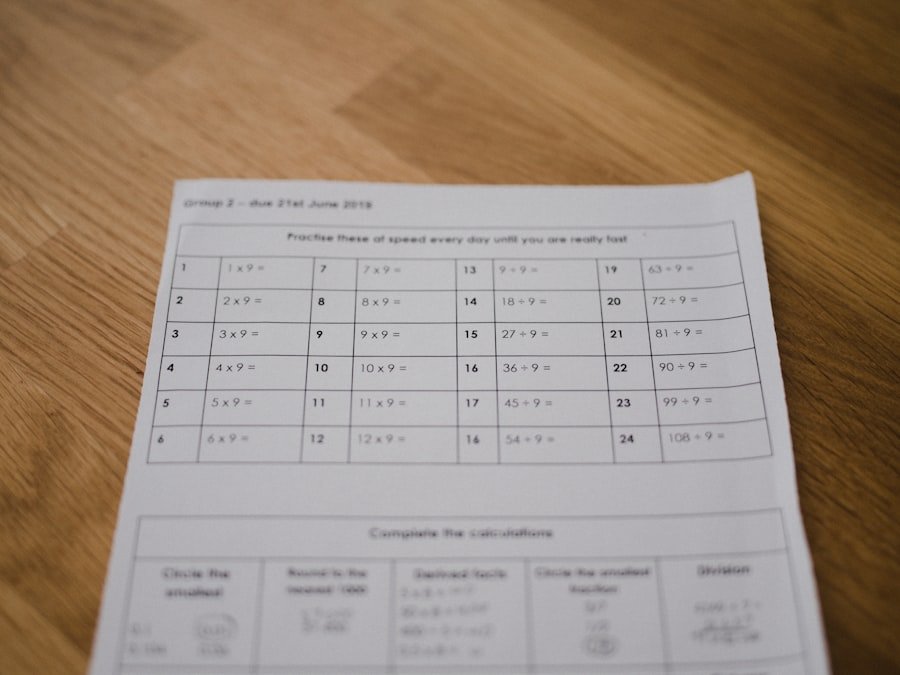
Organization plays a crucial role in effective problem-solving. A cluttered workspace or disorganized thought process can lead to confusion and hinder progress. Establishing a systematic approach to tackling problems can significantly enhance clarity and efficiency.
For instance, creating outlines or flowcharts can help visualize the steps needed to solve a problem, making it easier to track progress and identify areas that require further attention. In addition to physical organization, mental organization is equally important. Keeping notes structured and categorized allows for quick reference when revisiting complex topics or problems.
Digital tools such as project management software or note-taking applications can aid in maintaining organization by providing platforms for tracking tasks and deadlines. By cultivating an organized environment—both physically and mentally—individuals can minimize distractions and focus their energy on finding effective solutions.
Managing Time Effectively
Time management is an essential skill that directly impacts one’s ability to solve problems efficiently. In today’s fast-paced world, juggling multiple responsibilities can be overwhelming; thus, prioritizing tasks becomes crucial. Utilizing techniques such as the Eisenhower Matrix helps individuals categorize tasks based on urgency and importance, allowing them to allocate time effectively toward high-priority issues while minimizing distractions from less critical activities.
Moreover, setting specific time limits for problem-solving sessions can enhance focus and productivity. The Pomodoro Technique, for example, encourages individuals to work in concentrated bursts followed by short breaks. This method not only prevents burnout but also promotes sustained attention during problem-solving efforts.
By managing time wisely, individuals can create an environment conducive to deep thinking and creativity—two essential components of effective problem-solving.
Maintaining a Positive Attitude
A positive attitude is often overlooked yet plays a vital role in successful problem-solving endeavors. Approaching challenges with optimism fosters resilience and encourages individuals to view setbacks as opportunities for growth rather than insurmountable obstacles. This mindset shift can significantly influence one’s approach to tackling difficult problems; instead of feeling defeated by complexity or failure, individuals are more likely to persist and explore alternative solutions.
Additionally, cultivating a positive attitude enhances collaboration with others. When working in teams, maintaining an encouraging atmosphere promotes open communication and idea-sharing among members. A supportive environment allows individuals to express their thoughts freely without fear of judgment, leading to more innovative solutions that benefit from diverse perspectives.
Ultimately, embracing positivity not only enriches personal experiences but also contributes to collective success in problem-solving endeavors across various contexts.
FAQs
What are some study tips for solving complex math problems?
Some study tips for solving complex math problems include practicing regularly, breaking down problems into smaller steps, seeking help when needed, and using resources such as textbooks and online tutorials.
How can I improve my problem-solving skills in math?
To improve problem-solving skills in math, it is important to understand the underlying concepts, practice regularly, work on a variety of problems, and seek feedback from teachers or peers.
What are some effective ways to manage time when working on math assignments?
Effective time management when working on math assignments involves setting aside dedicated time for studying, breaking down assignments into smaller tasks, prioritizing tasks, and avoiding procrastination.
How can I stay motivated while working on challenging math assignments?
To stay motivated while working on challenging math assignments, it can be helpful to set specific goals, reward yourself for progress, seek support from peers or mentors, and remind yourself of the long-term benefits of mastering math skills.
What resources can I use to improve my math skills?
There are various resources available to improve math skills, including textbooks, online tutorials, educational websites, practice problems, and math study groups. Additionally, seeking help from teachers or tutors can also be beneficial.